
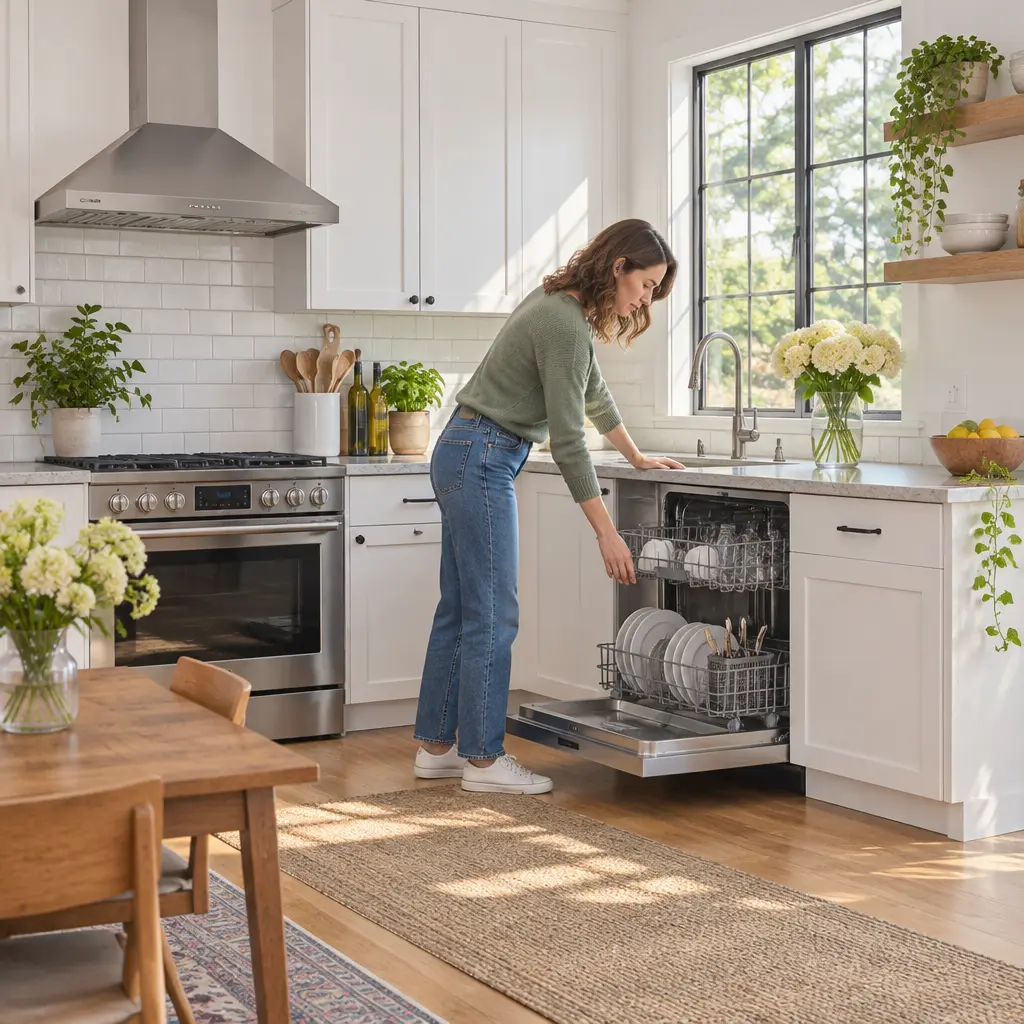
A smart kitchen uses connected appliances, sensors, and software to automate or remotely manage cooking and household tasks; a traditional kitchen relies mainly on manual controls and standalone appliances. For most households, a full upgrade is not automatically worth the cost: targeted smart devices can add convenience and energy-management features, while traditional equipment often remains the better-value choice when appliances work well or reliable connectivity is unavailable. The decision depends on purchase and installation costs, compatibility, privacy, repairability, and how often household members will use the features. The U.S. Energy Information Administration reports that residential appliances and lighting account for a meaningful share of household energy use, but smart features do not guarantee savings; results depend on the device, settings, and behavior.
Smart kitchen technology defines the upgrade
A smart kitchen is a kitchen in which internet-connected appliances or sensors exchange information with a phone, home network, or other devices to support monitoring, control, automation, or alerts. The National Institute of Standards and Technology describes the Internet of Things as networked devices that interact with the physical world through sensors and actuators. In a kitchen, examples include a refrigerator that tracks internal temperature, an oven controlled through an app, or a leak sensor that sends an alert.
The category includes both connected versions of familiar appliances and smaller add-ons. Smart refrigerators, ovens, dishwashers, faucets, lighting, plugs, and leak detectors are distinct examples, not a single all-or-nothing system. A kitchen can therefore be partly smart: a homeowner might add a connected thermostat or appliance plug while keeping conventional cooking equipment.
Connected appliances and remote control
Connected appliances use Wi-Fi or another communications standard to share status or accept commands. Depending on the model, an oven may allow remote preheating, a dishwasher may report cycle completion, and a refrigerator may send a door-open warning. These functions are most valuable when they solve a recurring problem—such as forgetting whether a cycle has finished—rather than simply adding another app to manage.
Sensors, automation, and safety alerts
Sensors detect conditions such as water leakage, smoke, temperature, or motion; automation uses those readings to trigger an action or notification. A leak sensor beneath a sink can alert a homeowner early, while a smart plug can schedule a compatible small appliance. These devices can improve awareness, but they should not replace required smoke alarms, safe cooking practices, or manufacturer-approved appliance controls.
Traditional kitchens and manual control
A traditional kitchen uses appliances operated directly at the unit, without requiring an internet connection or app. Its strengths are straightforward operation, fewer connected components, and reduced reliance on accounts, software support, and home-network performance. These kitchens can still be energy-efficient when they use efficient appliances and sensible cooking and washing habits.
Smart kitchen costs and benefits shape upgrade value
The value of a smart kitchen is the practical benefit a household receives relative to the purchase, installation, maintenance, and privacy costs. There is no universal savings figure: models vary, energy prices differ, and a feature that is useful to one household may go unused in another. Compare the full installed price and the appliance’s performance—not just its connected features—before deciding.
Convenience and accessibility
Remote monitoring, voice control, and alerts can make routine tasks easier, particularly for people with mobility limitations or busy schedules. A notification that a dishwasher has finished or a refrigerator door has been left open is a concrete benefit. However, remote operation should be used only where the manufacturer permits it and where the task can be performed safely; internet access does not make unattended cooking risk-free.
Energy use and operating costs
Smart controls may help users schedule certain activities, monitor consumption, or avoid waste, but connectivity itself does not make an appliance efficient. The U.S. Department of Energy’s ENERGY STAR program evaluates products against energy-efficiency criteria, making the ENERGY STAR label and the EnergyGuide label more useful comparison points than a “smart” label alone. For a fair comparison, check annual energy estimates, local utility rates, usage patterns, and whether the smart function can deliver a measurable change.
A useful illustration is a dishwasher with a delay-start feature: scheduling a cycle for a lower-rate period may reduce bills where time-of-use pricing applies, but it will not help a household whose electricity price is constant. Likewise, an app-based oven notification may reduce forgotten preheating without materially changing the oven’s energy consumption.
Purchase, installation, and repair costs
The upgrade cost includes the appliance premium, delivery, electrical or plumbing work, network equipment where needed, and possible subscription fees. Installation requirements can be especially important when replacing built-in ovens, ranges, or dishwashers. Before purchase, verify dimensions, required circuit or fuel connections, warranty terms, service availability, and whether the core functions remain usable if an app or cloud service is discontinued.
Smart kitchen risks depend on connectivity and support
Connected equipment introduces dependencies that conventional appliances generally avoid: wireless networks, software updates, user accounts, cloud platforms, and data policies. These do not make smart appliances inherently unsafe or unsuitable, but they should be part of the buying decision. The Federal Trade Commission advises consumers to consider connected-device security and privacy, including updates and the information a device collects.
Privacy and cybersecurity
Smart devices may collect operational data, account details, or voice commands, depending on their features and settings. Review the privacy notice, disable unnecessary permissions, use unique passwords, enable multifactor authentication when available, and install security updates. A separate home-network guest or device network can also reduce exposure if the router supports it.
Compatibility and product lifespan
Compatibility means that an appliance can work with the household’s network, phone, smart-home platform, and other devices. Standards and integrations change, so buyers should check supported platforms and determine which features work locally versus through a company’s servers. If remote services end, the appliance should ideally retain its basic cooking, cooling, or washing functions through physical controls.
Reliability and repairability
Reliability concerns how consistently a product performs; repairability concerns the availability and cost of parts and qualified service. Connected electronics can add components that may need troubleshooting, while software updates can alter how controls behave. Compare warranty coverage, local repair options, parts availability, and independent reliability information. A conventional appliance is not automatically more durable, but fewer digital dependencies can make day-to-day operation simpler.
Traditional kitchens remain practical alternatives
Traditional kitchens suit households that prioritize simple controls, predictable operation, and lower upfront costs. They also work well where broadband is unreliable, household members prefer physical controls, or the added features would see little use. The key comparison is not “new technology versus old technology,” but whether a particular feature addresses a real need at a reasonable total cost.
When a traditional appliance is the better fit
Keeping or buying a conventional appliance can be sensible when the existing unit performs reliably, the replacement is not needed, or the smart model’s price premium cannot be justified. It may also be preferable for people who want to avoid app accounts and cloud services. In many cases, replacing an inefficient or failing appliance with an efficient conventional model delivers a clearer benefit than replacing a working appliance solely to gain connectivity.
A hybrid kitchen can limit cost and complexity
A hybrid kitchen combines standard appliances with a few connected tools selected for clear purposes. For example, a household might retain its range and refrigerator while adding a leak sensor, smart lighting, or an ENERGY STAR-rated dishwasher with useful cycle alerts. This staged approach allows users to assess convenience and reliability before investing in a coordinated system.
A household decision framework determines whether the upgrade is worth it
A practical decision compares the household’s needs, expected use, total cost, efficiency, and tolerance for digital dependencies. Use the following checks before purchasing:
- Identify a specific problem the feature will solve, such as missed cycle alerts or early leak detection.
- Compare the smart model with a conventional alternative on purchase price, energy use, warranty, and repair options.
- Confirm that the appliance fits the kitchen and meets electrical, plumbing, ventilation, or fuel requirements.
- Check Wi-Fi requirements, smart-home compatibility, subscription costs, privacy settings, and update policies.
- Ask whether basic functions remain available if the network, app, or manufacturer’s cloud service is unavailable.
For a concrete example, a family that frequently leaves the refrigerator door ajar may value a door alert, while a household with a reliable routine may not. A person with limited mobility may benefit substantially from voice or remote controls, whereas a user who prefers manual operation may see little return. These differences make a feature-by-feature assessment more useful than buying a complete smart suite by default.
Conclusion: smart kitchen upgrades are worth it when they solve real problems
Smart kitchens add connected appliances, sensors, remote control, and automation; traditional kitchens offer direct operation with fewer digital dependencies. The strongest case for upgrading comes from a specific, frequently used benefit—such as accessibility, monitoring, or a safety alert—combined with competitive energy performance and dependable support. The strongest case for staying traditional is a working kitchen, limited need for connected features, or a preference for simple and repairable equipment.
Before replacing anything, compare total ownership costs and energy labels, review privacy and support policies, and consider a small hybrid upgrade. For further research, consult ENERGY STAR product guidance, the U.S. Department of Energy’s appliance information, and the Federal Trade Commission’s consumer advice on connected devices.
Sources: National Institute of Standards and Technology, Internet of Things (IoT), https://www.nist.gov/internet-things-iot; U.S. Energy Information Administration, Use of Energy Explained: Energy Use in Homes, https://www.eia.gov/energyexplained/use-of-energy/homes.php; U.S. Department of Energy, Energy Saver: Appliances and Electronics, https://www.energy.gov/energysaver/appliances-and-electronics; ENERGY STAR, Products, https://www.energystar.gov/products; Federal Trade Commission, Internet of Things: Privacy & Security in a Connected World, https://www.ftc.gov/reports/federal-trade-commission-staff-report-november-2013-internet-things-privacy-security-connected; Federal Trade Commission, How to Secure Your Home Wi-Fi Network, https://consumer.ftc.gov/articles/how-secure-your-home-wi-fi-network